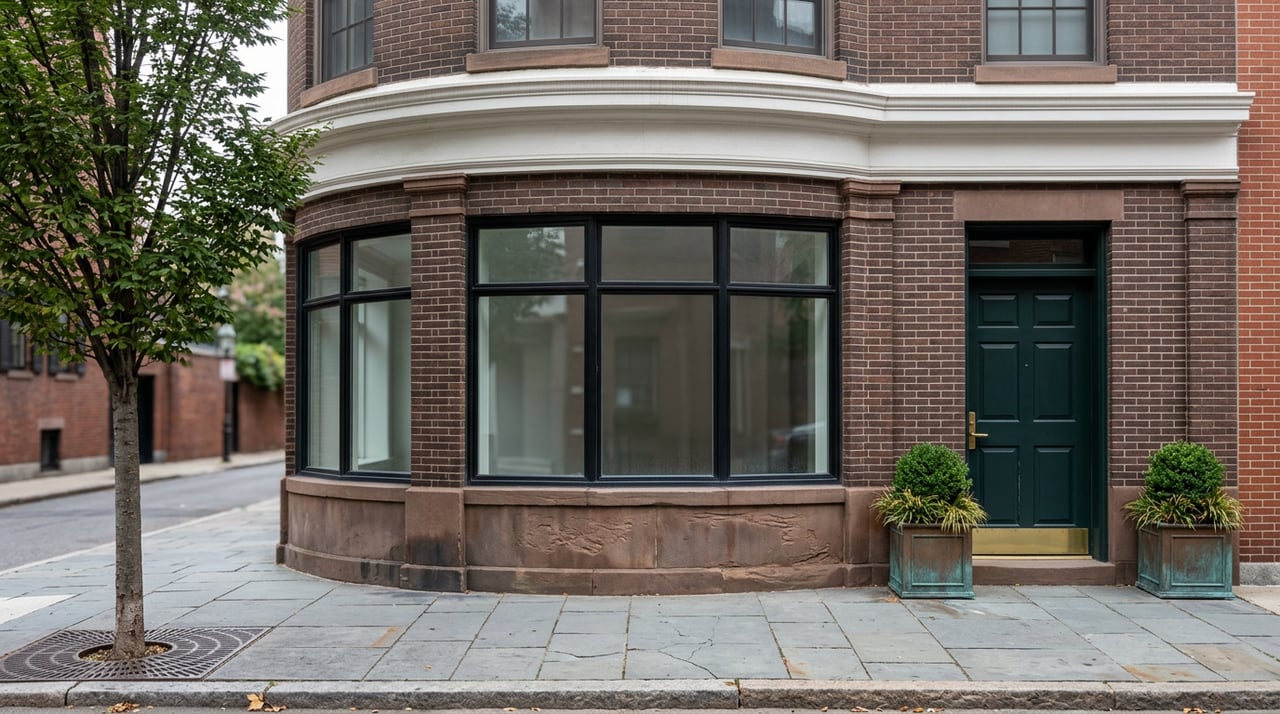
On February 19, 2026, the Beacon Hill Architectural Commission held its monthly hearing over Zoom and unanimously denied, without prejudice, a five-story mixed-use building proposed for the corner of Charles and Cambridge Streets, the site that currently holds a CVS Pharmacy. The architect, Eric Robinson of Boston-based RODE Architects, had brought a "stepped-back" sixth-floor penthouse designed to hide the mechanicals and a first floor along Cambridge Street with a "curved piano shape" worked into the window configuration. None of it mattered enough. A denial without prejudice means the developer can come back with a revised design, but not with this one.
If a professionally designed redevelopment with real capital behind it can get stopped cold at a monthly hearing, it's worth asking what that means for someone who just wants to replace the windows in a third-floor bedroom. The answer is the same commission, the same review, and in most cases far less room to negotiate than a buyer expects when they fall for a listing photo of restored brick and black shutters.
The Review Every Listing Description Skips
Anything on the exterior of a Beacon Hill building that can be seen from a public way falls under the jurisdiction of the Beacon Hill Architectural Commission, and the definition of "public way" is broader than most people assume. It covers not just the sidewalk in front of a house but views from the Boston Common, the Public Garden, Storrow Drive, the Charles River Esplanade, and the Longfellow Bridge. The commission was created by Chapter 616 of the Acts of 1955 and still operates under that authority, meeting on the third Thursday of every month to review everything from window replacements to blade signs to full facade restorations.
The guidelines are explicit about what they're protecting and how little flexibility exists once a building falls inside the boundary:
"no alteration will be approved that is inappropriate to the historical character, architectural design, and materials of the building"
That single sentence is why the vast majority of applications that come before the commission each month aren't requests to modernize anything. They're requests to replace something in kind. The commission's February 2026 hearing included an application to remove four non-historic sash sets at 11 Joy Street and rebuild them to match the original jambs, sills, and brick moldings. An April 2026 hearing included a request to restore three front-facing transom lights on a Brimmer Street oriel window in kind. The commission isn't approving upgrades. It's approving reconstructions of what used to be there.
What "True Divided Light" Really Costs You
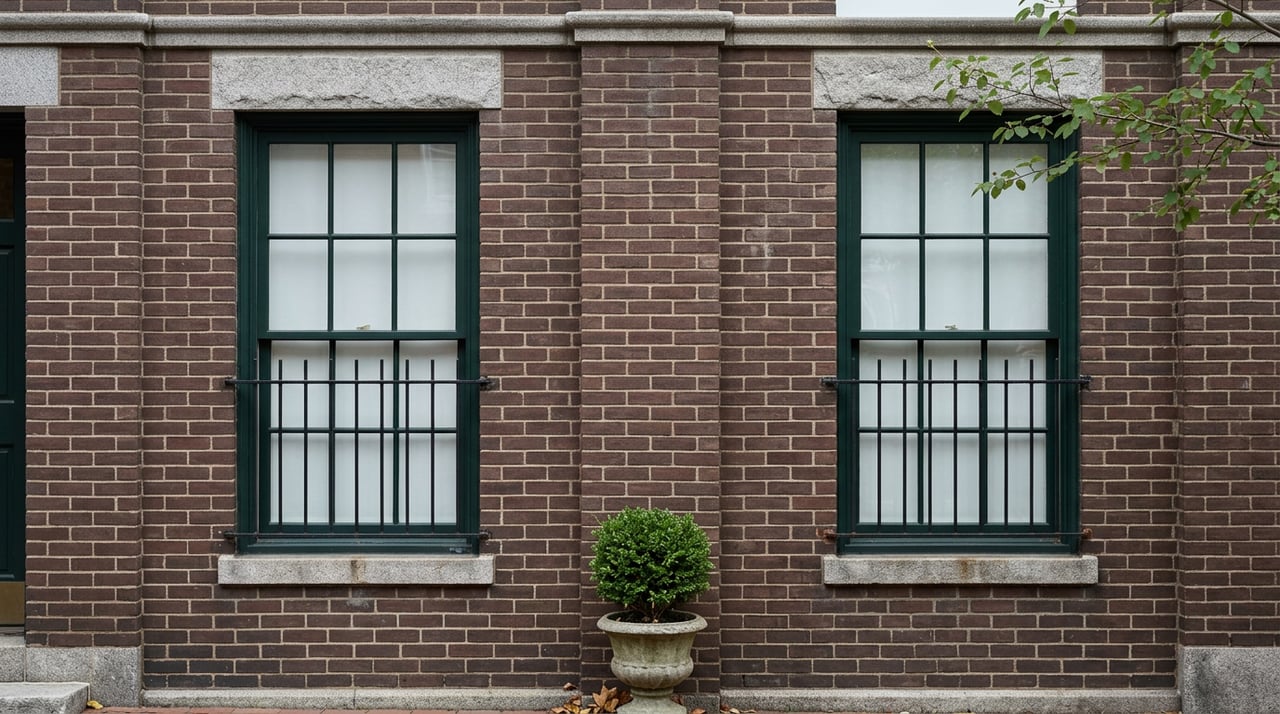
This is where the friction shows up in a contractor's estimate rather than a hearing transcript. The commission's architectural guidelines require through-glass muntins on replacement windows, meaning simulated grids, whether snap-in, surface-applied, or sandwiched between panes of glass, are not permitted. Windows have to use true divided lights, with an exterior muntin depth of no less than three-eighths of an inch and a putty-line profile that matches historic sash construction. Recent applications reviewed by the commission have gone further, specifying no low-E glass at all, the coated glass most homeowners elsewhere in Massachusetts install specifically to cut heating and cooling costs.
That single restriction is worth sitting with. A homeowner in almost any other Boston neighborhood replacing old windows would default to low-E glass without a second thought. On Beacon Hill, that option is frequently off the table, which means the energy-efficiency upgrade a buyer might be counting on to offset a high purchase price isn't always available on the exterior-facing side of the building. Add custom wood sash construction, true divided lights, and color-matched spacer bars, and a straightforward window job becomes a specialty trade project priced accordingly.
The same logic applies to masonry. Mortar has to be color-matched and tooled to the original, brick has to be sourced or salvaged to match the existing units, and the commission's guidelines specifically call for repointing that avoids visual conflict between new mortar and aged brick rather than letting a fresh repair stand out against the weathered surface around it. None of this is optional once a building sits inside the district, and none of it is priced into the sale until someone actually pulls a permit.
The Clock Starts at Approval, Not at Closing
Once a project clears the commission, the approval isn't permanent. A Certificate of Appropriateness is valid for two years from the date of the decision letter, and the applicant is required to notify the commission of any changes to the approved scope. Owners are also told not to buy materials or begin work until they've received written confirmation of approval, and a placard has to stay visible on site for the duration of construction.
Skipping that step carries real exposure. Guidelines note that unapproved exterior alterations are subject to fines of up to $1,000 per day. That isn't theoretical. The commission's April 2026 hearing included a violation review item for the ratification of an unapproved security camera, vinyl decals, and signage lighting, meaning someone installed those items first and had to go back and ask forgiveness after the fact. For a buyer inheriting a property, that history matters. Unauthorized work done by a previous owner doesn't disappear at closing. It becomes the new owner's problem to resolve, often at the same commission hearing where their own renovation plans are waiting to be heard.
If the Property Is a Condo, There's a Second Gate
City approval is only the first hurdle for anyone buying a condominium inside the district. Massachusetts condominiums are governed privately through the master deed, bylaws, and Chapter 183A of state law, and there is no regulatory oversight of condo associations by the Commonwealth itself. In practice, that means a project touching common walls, roofs, windows, or shared systems may need separate sign-off from the trustees, independent of whatever the Beacon Hill Architectural Commission has already approved.
State law does require condo associations to maintain an adequate reserve fund for common expenses, collected separately from day-to-day operating funds, which is worth checking before finalizing a purchase in a building that may need shared facade or roof work down the line. A buyer who reviews the master deed and bylaws early, before falling in love with a specific unit's floor plan, avoids discovering after closing that the trustees have their own opinion about the window replacement the seller promised was already cleared.
What This Actually Buys You at the Closing Table
None of this shows up in the median price, but it's baked into it. Over the three months ending in May 2026, Beacon Hill homes sold for a median price of $1.3 million, with the typical sale closing in 37 days, down sharply from 69 days over the same period the year before. Condo pricing per square foot in the district ran close to $1,445 in the first quarter of 2026, placing Beacon Hill behind only the Seaport, Back Bay, and Downtown among Boston's most expensive neighborhoods for condos.
That price isn't just paying for square footage or a Beacon Hill mailing address. When a listing says a unit was recently renovated, part of what a buyer is paying for is the fact that someone else already absorbed the cost and the calendar time of clearing this exact review process. A fixer-upper priced below that per-square-foot benchmark might look like a bargain until the true divided light windows, matched brownstone, and second layer of condo approval get added to the renovation budget. The gap between an "as is" Beacon Hill property and a "recently restored" one is rarely just cosmetic. It's regulatory.
Before touring a Beacon Hill property that needs exterior work, it's worth asking a few questions the listing sheet won't answer:
- Has any exterior work been done in the last five years, and if so, is there a decision letter or Certificate of Appropriateness on file?
- If the building is a condominium, do the bylaws require separate trustee approval for work touching windows, roofs, or shared walls?
- Is there any unresolved violation history with the commission tied to this address?
- If windows or masonry need replacement, has a contractor familiar with BHAC-compliant materials priced the job, rather than a standard renovation estimate?
A Few Questions Worth Asking Before You Sign
Does BHAC review apply if the work isn't visible from the street? The commission's jurisdiction is tied to visibility from a public way, which on Beacon Hill includes views from the Common, the Public Garden, Storrow Drive, the Esplanade, and the Longfellow Bridge. Rear-facing work that genuinely can't be seen from any of those vantage points may fall outside review, but that determination is worth confirming with commission staff before assuming an exemption applies.
How long does approval typically take? The commission meets once a month, on the third Thursday. Straightforward, in-kind repairs are often handled through administrative review and ratified at the next hearing without the applicant needing to appear. More involved projects, like the Charles and Cambridge Streets redevelopment, can require multiple hearings and revised submissions before a decision is reached.
What happens if a previous owner did unauthorized work? It becomes part of the property's history, not the previous owner's problem alone. A new owner can be required to bring the work through a violation review hearing, which may mean removing or modifying whatever was installed without approval before other permits move forward.
Beacon Hill's rules exist to protect something real, a streetscape that has held its character since Charles Bulfinch's era. But protecting that character has a price, and it isn't the one printed on the listing. Anyone buying, selling, or renovating inside the district benefits from understanding that price before it shows up in a contractor's change order or a commission's denial letter.
If you're weighing a purchase, a sale, or a renovation on Beacon Hill and want a clear read on what a specific property's history with the commission actually looks like, John Maxfield has spent three decades pricing and negotiating inside exactly this kind of market. Get in Touch to talk through your plans before you're locked into a timeline the commission hasn't approved yet.